Grob Kies AG
Objective
In defined areas selected numbers of species were monitored, during a period of 6 years (2006-2011), to learn more about their qualitative and quantitative development.
The Swiss company ‘Grob Kies’ has published a monitoring report in cooperation with the foundation nature and economy (Stiftung Natur und Wirtschaft) certifying restored sites.
The full report of the monitoring is in German and available on request.
Result
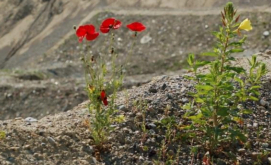
During that period, the diversity of plant species decreased with the arrival of more sophisticated plants replacing pioneers and attracted by more fertile soil. The reduction of diversity was also caused by migration of garden plants and invasive species (neophytes). This phenomenon could also be observed in other types of habitats. The protection of rare species needed regular interventions maintaining the appropriate habitat conditions. This would allow even rare species to spread fairly quickly. However, the withdrawal of rare species would be as fast if no intervention would take place. In particular, invasive neophytes had to be identified and removed immediately before they could settle and spread.
Surprisingly, the highest diversity was observed not in restored areas without disturbance but in the dynamic and changing environment created by coordinated aggregates extraction allowing sufficient space to pioneer species. A settled and developed habitat is, according to the monitoring report, apparently not the ideal environment for high diversity.
The rare yellow-bellied toad spawned in too little water holes drying out quickly during summer. Replacing the frog eggs into bigger water places saved some of the reproduction. The use of gravel and sand to cover these little water holes could avoid the spawning as the eggs would not survive. More suitable water holes had to be deepened ensuring better conditions for the toads.
This project is closed, but the site is still in action and is also supervised by a biologist, who also makes his proposals for improvement of the biotopes in an annual report. (Reports 2017).
Partners
Stiftung Natur und Wirtschaft (foundation nature and economy: www.naturundwirtschaft.ch).