Hanson Hispania (HeidelbergCement Group)
Objective
A study has been made in applied research for the management of biodiversity in gravel extraction sites with permanent water ponds, both restored and in operation, to assess the compatibility of extractive activity with the conservation of aquatic environment species, considering the otter as an indicator species, with highly satisfactory results.
Context
The results were presented at the Quarries Alive 2018 International Congress, to be held from May 2 to 4 in Évora, Portugal, with an oral communication, in collaboration with both entities.
The project has had the support of the Biodiversity Foundation integrated into the program: "QUARRY CONNECT: Benefits of the management of Biodiversity in restored gravel extraction sites and assets for the connectivity of wetlands and banks of the west of the peninsula".
Actions
1. The population analysis of the otter in the lagoon systems of the analyzed gravel extraction site and in its close environment is made up of three complementary analyzes:
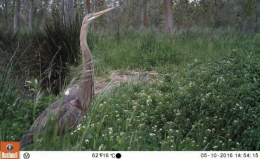
a) Analysis of images of camera traps, which allows to characterize the behavior patterns of the otter and their preferences for use of the different locations of the lagoon system, as well as to know the biodiversity of macrofauna in the study gravel.
b) Characterization of the diet in the lagoon systems studied and in their environments, which indicates the use made by otters of the different trophic resources of the territory.
c) Genetic analysis of excrement for the identification of individuals and their sex, which allows us to estimate the size of the population and the current connectivity of the territory for otters.
2. Study of the suitability of otter habitat in the gravel extraction site: for this, different variables were analyzed through linear regression models, allowing to know specifically which of the habitat variables have the greatest effect on habitat use by otters.
3. Analysis of the exploitation environments as a contribution to the connectivity of the otter population: based on the application of the probabilistic connectivity index (PC), to evaluate the suitability of the habitat tiles for a specific species, of the gravel extraction site of the present project. The Probabilistic Connectivity Index (PC) is an indicator that evaluates the importance that a landscape tile has for the connectivity of a specific species.
4. Diagnosis and execution of improvements to the environment of the gravel extraction site, based on the results obtained.
5. Design and drafting of an Otter Management Plan in gravel extraction sites. Along the same lines, a Manual of management and management of the species, applicable to other analogous farms in the north-west of the peninsula, has been designed based on the results obtained. Following the same line of argument from the previous point, this document is a contribution to the sector and a channel for the exchange of experiences that allow progress in improving both the Biodiversity Management Plans during the extraction period, and the Plans of Ecological restoration.
6. Communication plan.
Result
The use of the naturalised lagoons as breeding places of the otter population installed in the area is demonstrated, with the area of campeo being compatible both with the restored areas and those that are in operation. The actions of habitat improvement developed have benefited a total of 25 species of birds, amphibians and reptiles analyzed.
The gravel extraction sites of the company, with permanent water ponds, with average depths of 2 m, in operation or restored, have proved to be allies in the conservation of aquatic habitat species in territories with industrial agricultural activity, functioning as authentic reserves . The exemplification with a monitoring program of indicator species contributes to the technical progress of the follow-ups in the restoration of gravel extraction sites, improving the image of the sector in society, in the local community and in the administration.
The resulting conclusions and methodology have been integrated into the company's Environmental Management System, integrating them into the Biodiversity Management Plan and into the ongoing ecological restoration plans to optimize them.
The entire project has been externalized to society through a Communication Plan on Facebook and Twitter social networks.
Partners
The study has been developed in collaboration with the Complutense University of Madrid and the Tormes Foundation - EB, an NGO specializing in the management of biodiversity and ecological restoration of gravel extraction sites.