LafargeHolcim
Objective
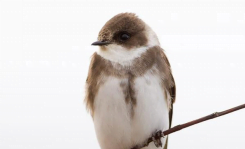
Contribution of aggregate sector to the recovery of an endangered species: the case of the sand martin.
This project addresses the conservation of a protected species that depends almost exclusively on the quarry areas for their survival. The success in the conservation of this species would be a great environmental success of the aggregates sector. It will also highlight the possibility of performing simple actions from the quarry activity in the conservation of many species that are attracted by the quarry curves as a refuge and to develop their vital functions.
Context
The sand martin has an extraordinary capacity to dig burrows. Given that the availability of curves could be a limiting resource for the colonisation of the quarry slopes by other species of conservation interest, the sand martin will favour a whole cohort of secondary user species of the burrows. These secondary user species can belong to a wide range of taxonomic groups (birds, insects, reptiles ...) In this study the use of the burrows of the sand martin was observed for five species of birds, so the activity of the sand martin It may contribute to increase local biodiversity.
Actions
This project began in 2016 with a nationwide study on 29 aggregates sites. In 2017, it focused on 10 aggregates sites located in the provinces of Guadalajara, Madrid and Toledo because they were the ones with evidences of sand martin. A total of 30 sand martin colonies were studied and more than 8000 burrows of this species were monitored. The abundance of breeding pairs, the phenology of reproduction, and the occupation rate of burrows by sand martin and secondary users were determined. Habitat preferences were studied at three scales: a) scale of quarry exploitation, b) colony scale, c) burrow scale.
Simultaneously, an exhaustive bibliographic search was carried out to learn about conservation actions and documented good practices, carried out for the sand martin in gravel extraction sites in other areas of its distribution, and the creation of artificial slopes (preferably of sandy materials) for the reproduction of this species.
Based on a review of the literature available internationally on good practices and on the management of the sapper aircraft and on the information obtained on the habitat preferences of the sapper plane and its reproductive phenology in the geographical scope of the study, a Good Practices Guide was elaborated.
Result
The project includes the preparation, implementation and dissemination of a Guide of Good Practices and Actions for the management of the sand martin in quarry operations. The Guide can be used by the aggregates sector in Spain and, adjusted according to the local phenology of the species, it can be used throughout its global distribution range.
It is intended to demonstrate that quarry activity is compatible with the conservation and promotion of the local level of biodiversity.
It is committed to the dissemination of the Guide to Good Practices at the national level for a protected species that depends on the quarry areas to nest.
Finally, it contributes to the scientific knowledge of a protected species.
The studies have allowed so far to carry out four Master's Theses and will culminate with the completion of a Doctoral Thesis.
With the application of the protocol at a sectoral level, the knowledge of the species and the levers to be pressed would be significantly increased in order to advance in its recovery.