Ariec s.r.l. – Grupo Grigolin
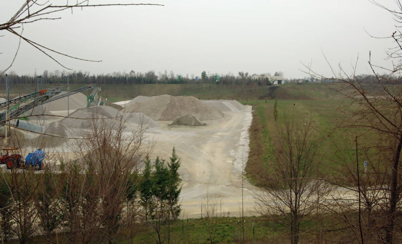
The Grigolin Group based in Treviso, Italy, leader in the field of products for the building trade, had the enterprising idea of making a proposal to the relevant local authorities for reclamation of an abandoned area in the municipality of Spilimbergo in the northern Italian province of Pordenone. Since the 1940s a company named “Cantieri Rovina srl” had been carrying out neutralisation of ammunition and explosive wartime remnants in this area, recycling and selling both the metal and the explosives. In October 1979 an explosion caused death, injury and damage and strewed the approximately 43 hectares with various types of wartime waste. For almost 20 years the area was not reclaimed and “Cantieri Rovina srl” went bankrupt without paying the families of the victims anything in the way of compensation. A.Ri.Ec. srl (an ecological reclamation company) took over from “Cantieri Rovina srl” and presented a reclamation plan in exchange for the setting up of sports facilities, but financial guarantees were not given and the sum made available by the state was never used because no authority was able to manage reclamation. In April 1997 the Grigolin family intervened to break this impasse by proposing to reclaim and recover the site in exchange for authorization to exploit the reclaimed area as a gravel pit. The Grigolin Group took over ”A.Ri.Ec. srl”, that had been declared bankrupt, promised to pay its debts towards creditors, and paid damages to the third parties affected by the explosions. All the work of clearing the zone was carried out at the expense of the Grigolin Group at a total cost of over two and a half million euros, with a commitment to enforce observance of all the laws and regulations applicable to such operations. Access to the area involved was prohibited for anyone except the police and the workers; Grigolin also provided personnel who cooperated closely with the Spilimbergo Carabinieri. The report, drawn up by the company who reclaimed the lard, lists a quantity of approximately 1,230,000 items, including bullets, detonators, rockets, fuses, hand grenades, grenades and aircraft bombs. The explosive devices found were accumulated and exploded on the site and in the Cellina torrent, except for the specially charged devices, which were transported to the headquarters of the Italian Army’s special bacteriological and chemical unit (NBC) at Civitavecchia (Rome). Clearing of the entire area took ten months and the quarrying activities were accepted willingly by the population and local authorities as a means for solving a serious problem of collective fear and insecurity. For once an industrial project of this type, instead of creating hostility on the part of the local inhabitants, has proved to be the solution to a problem that had remained unsolved for too long.