Omya GmbH
Objective
The main goal of the Long-term Biodiversity Index (LBI) is to measure the impact of a quarry on the local biodiversity. Core is the comparison of the actual state to the original state following the principles of EIA Directive and ISO 14 000 family of standards, particularly 14 040 et sqq. and 14 063. Based on this the optimal strategy for the renaturation can be choosen.
This project is carried out since 2004 in a partnership between Omya and WWF-Austria.
Context
The mining area of OMYA in Gummern, Austria provides two major habitat types: the rocky sites of marble mining areas and the mostly revegetated/renatured dumping areas of the not used materials of lower quality. The quarry is mainly surrounded by managed forests.
Each year about some million tons of raw material are taken from the quarry and about 50% are to be deposited on the mining waste dump. This leads to major changes on the level of habitats for plant and animal species.
Solution
The Long-term Biodiversity Index (LBI) is a measuring method for biodiversity. The value of impact of a quarry, gravel pit or landfill is indicated by a number in percent. To provide an international comparable result (benchmarking), the biodiversity within the quarry is set into relation to the biodiversity of the surrounding landscape and it is taken into account, if a species is endangered or not.
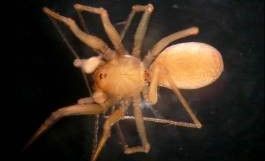
In the mining site of Gummern plant species, birds and spiders have been selected for monitoring. Since 2004 every year the data on this species is collected in a standardised way and gives high valuable information on the biodiversity on different sites within the quarry and the surrounding area.
Result
The collected and analyzed data show that the biodiversity in the renatured areas of the waste dump as well as of the mine increased compared to the surrounding areas and is getting higher year by year. The information on the needs of rare and endangered species helps to adopt the recultivation/renaturation concept to ensure a positive development of biodiversity in the ongoing process. In 2018, the project was still on-going and the monitoring and investigation activities were developed periodically.
Partners
WWF-Austria (until 2018)