Holcim Granulats France
Objective
Ecological rehabilitation with high diversity of habitats.
Context
Since 1985, this alluvial sand pit has been practicing innovative techniques of rehabilitation in order to promote biodiversity.
In 2006, the pit was included into the Natura 2000 site called “Vallée de la Lanterne” (ZPS FR4312015 et SIC FR4301344).
Solution
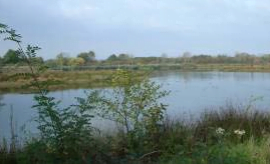
With the objective of promoting the transition plants growing between the land and aquatic environments (areas with variation of the water level), the site rehabilitation consists in creating islets, gentle slope banks, shallows, partially emerged coves, ponds…
The biological efficiency of the rehabilitation has been evaluated by an advanced scientific study.
Result
As a result, the rehabilitation created a high diversity of habitats (reed beds, alluvial beaches, wetlands, marshy alder-groves…) with a very rich and interesting flora and fauna with numerous species of regional or national interest.
Concerning the avifauna, the presence of many nesting bird species led to the ZPS designation of the Natura 2000 site “Vallée de la Lanterne”: with notably the kingfisher Alcedo atthis, black kite Milvus migrans, Montagu's Harrier Circus pygargus, and Red-backed Shrike Lanius collurio.
In addition, the large ponds host many wintering and migrating bird species, including about 20 species registered on the bird directive. On this area insects are also well represented, notably the Odonata and Lepidoptera orders.
Partners
The University of Besançon, laboratory of bio-ecology.