Holemans
Objective
To create different biotopes along the quarry ponds to reintroduce and protect different plants and animal species.
Context
The Diersfordter Waldsee north of the city of Wesel is one of the largest quarry ponds of the Lower Rhine region. Sand and gravel have been exploited in wet extraction process since 1962, hence more than 220 hectares have already been extracted. The permit allows to exploit more than 300 hectares until 2030. Most of the surface remains as open water.
Actions
To create biotope zones, which were prepared to exclusively develop naturally.
To develop a floodplain forest, mainly soft woods.
The creation of one large and several smaller islands to keep them free from the woods. They imitate a floodplain landscape with few vegetation, which assume major significance for a specialised avifauna.
A biotope zone is in creation, in which large reed beds are supposed to arise.
The ecological development of the Diersfordter Waldsee has been recorded by monitoring.
Result
More than 400 animals and about 250 plant species were identified, more than 80 of them are on the Red List of endangered species. Even after 15 years of documentation, almost all species can still be found in at least one of the biotope zones.
The biotope zones leads to increasing interest among the general public.
The Diersfordter Waldsee hosts one of the most important breeding colonies of seagull in Northrine-Westfalia.
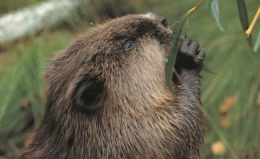
This forest offers habitat for different birds, such as Nightingale, Golden Oriole and Kingfisher. The beaver has successfully been re-established.