CEMEX UK
Objective
To create an area that would complement and enhance the rural landscape. Extraction and restoration provided the opportunity of transforming a tract of unattractive, prairie-like, intensively managed farmland into an aquatic landscape to increase the landscape value of the valley, increase its biodiversity and provide a local amenity of very high wildlife value.
Context
Branton Nature Conservation Area is located in an area of beautiful open countryside designated as an Area of Great Landscape Value. The Northumberland National Park boundary lies 2km to the west of the site and the River Breamish immediately to the north. Prior to extraction the land, which lies within the flood plain of the river, was in agricultural use and was prone to flooding.
The extraction of sand and gravel started in 1996 and has resulted in 1.66 million tonnes of valuable building material being available for local construction projects in the North East.
Originally permission for extraction was refused, primarily because it was deemed to be a sensitive location close to the National Park. This was overturned in 1993 on appeal on condition that the company restored the land to a nature conservation use.
Actions
During the restoration, discussions were undertaken with experts to ensure that the restoration would enhance the surrounding area. This included a desire by the Northumberland County Council to see to the restoration plan for the plant site, close to the quarry to be changed from woodland to grassland for grazing and shingle beds and scrapes to create a bird nesting areas and areas of standing water to provide a range of habitats close to the river. The nature conservation site has been planted with a selection of native British species of trees, mainly broadleaved, and the sowing of a Ryegrass dominated mix, a rich grass mix, with 20% wildflower mix to encourage native flora and fauna species. A number of habitats have been incorporated into the conservation area site to encourage wildlife - creation of nesting islands, lake margin woodland and reedbeds.
Result
As extraction has taken place the site has been progressively restored and today the site provides a nature conservation area with two lakes and a local community facility for walking and observing wildlife and as an additional facility for visitors to the Breamish valley and National Park.
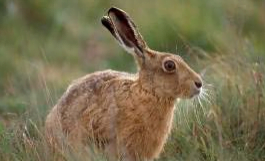
In total 55 species of birds, 14 of mammals, 5 of reptiles and amphibians, 21 of butterflies and moths and 7 of dragonflies and damselflies have been spotted on the site.
An additional benefit of the restoration scheme has been to provide some flood alleviation: the lakes provide additional capacity for excess surface water run-off and it has been estimated that flooding in Powburn and Branton will be reduced from once in 5 years to once in 10.
Partners
Northumberland County Council, Northumberland Wildlife Trust, River Tweed Commissioner